Articles and information about Splash and the work we do.
November 19, 2026
More Than a Toilet: What World Toilet Day Means in Zambia


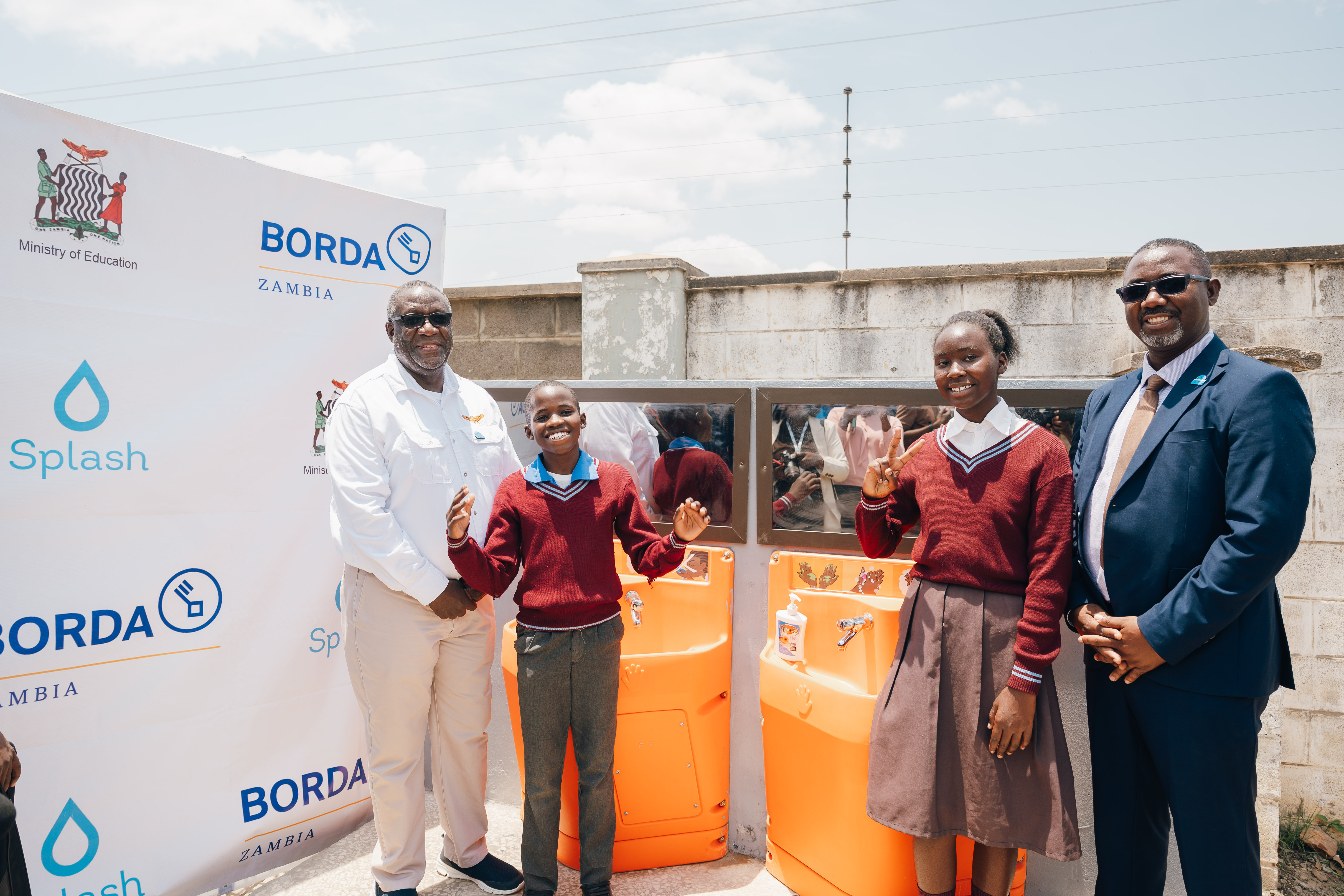
This World Toilet Day, we're sharing how Splash is backing the Government of Zambia's plan to bring clean water, working toilets, and menstrual health support to public schools in Lusaka, Kitwe, Ndola and Chipata.
Until this year, more than 2,400 children at Daina Kaimba Primary School in Matero, Lusaka, shared one drinking point with two taps. More than half of them are girls.
That isn't unusual. A 2025 citywide survey conducted by Splash found that there are about 78 students for every functional toilet across the cities Splash is working in. Additionally, soap was only available in about a quarter of schools and a separate space for girls to manage their periods existed in roughly one in five schools where adolescent girls were enrolled.
When toilets are this scarce, girls are often the first to miss out. That is why this year's World Toilet Day theme, "Safe toilets. Equal futures.", is particularly meaningful.
Government leads. We back the plan.
Project WISE (WASH in Schools for Everyone) is a Ministry of Education program, and Splash is proud to support it. Together, we're working to reach over 400 public schools in Lusaka, Kitwe, Ndola and Chipata and serve roughly one in ten Zambian students.
This is how Splash works everywhere. We design child-focused water, sanitation, hygiene and menstrual health solutions with governments. Our focus is on proving the model works, building local capacity, and handing the work to the people best placed to carry it on.
In Zambia, that looks like this:
- The Ministry of Education chooses the schools, sets the standards and signs off every finished facility. Toilet blocks are built to the Ministry's own designs.
- District Education Board Secretaries chair the working groups, bringing schools and sister ministries to the same table.
- Splash brings financing, technical assistance and quality assurance, working alongside implementing partners such as BORDA Zambia.
- National systems get stronger too. With support from partners including Splash, the Ministry is refining its guidelines for keeping school water and sanitation working, and updating its menstrual health guidance.
"This initiative belongs to the Ministry of Education." Mwansa Njelesani-Kaira, Country Director of Splash Zambia, explains, "Our job is to help the government build something that works in every school, and keeps working long after we step back."
Built with communities, not just for them
Research shows that new WASH infrastructure and toilets on their own don't keep children in school or keep their hands clean. What makes the difference is people using, cleaning and looking after them every day.
That's why every school gets the same complete package: safe drinking water, clean and private toilets for girls and boys, handwashing stations, menstrual health education led by teachers, and a plan to keep it all working. Our behavior change work reaches girls and boys, parents, teachers, cleaners and caretakers, because everyone has a part to play.
Schools take ownership too. At Daina Kaimba, Head Teacher Ms. Bernadette Chashi committed the school to looking after its new facilities, and to teaching students and teachers how to use and maintain them.
What's next
By the end of 2026, we expect to have started infrastructure work in 74 schools and launched behavior change programming in 30 schools across Zambia. The first 14 schools, all in Lusaka, have reached the final inspection stage with the government—a major milestone in advancing our work in Zambia.
Every child in Zambia deserves clean water, clean hands, a safe and functional toilet, and the support to manage their period at school, so that every student can thrive. School by school, Splash, the Government of Zambia, and our partners are showing it can be done, and built to last.
Give a safe toilet this World Toilet Day
A $100 gift helps keep 50 students comfortable and dignified at school with a safe, private toilet. Give today.