Articles and information about Splash and the work we do.
November 10, 2026
Small Habits. Lasting Impact.


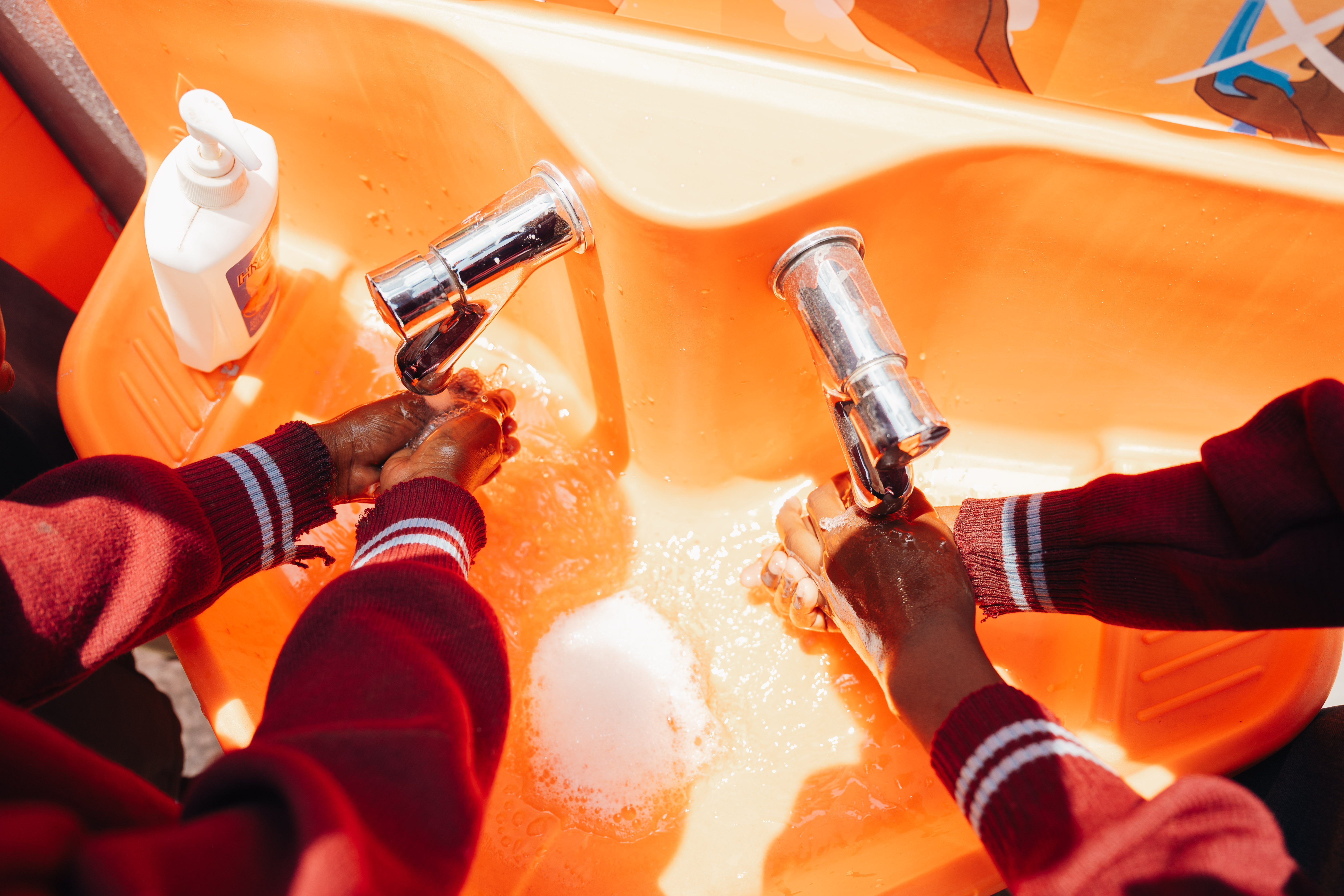
A child stops at a brightly colored handwashing station on the way to lunch. The sink is just the right height. There's soap within reach and a mirror overhead. What starts as a simple moment in the school day can become a healthy habit that lasts.
And thanks to supporters like you, thousands of children have the opportunity to build those habits every day.
It's an investment in something deceptively simple: making it easy for children to wash their hands with soap. But the results show just how powerful that investment can be.
In Kolkata, India, handwashing with soap before lunch rose from 25% to 90% in schools supported by Splash. Even more encouraging, that improvement was sustained more than 18 months after installation. Now, those lessons are shaping the next chapter of this work in Zambia, where students are already stepping up as handwashing champions.
Making the healthy choice the easy choice
Most children know they're supposed to wash their hands. But knowing what to do and doing it consistently are two different things.
Imagine being a young student trying to reach a sink that's too tall, finding there's no soap, or having to go out of your way to wash your hands before lunch. Even children who understand the importance of handwashing may skip it when the facilities aren't designed for them.
Your support changes that experience.
Handwashing stations built at children's height and placed near toilets and eating areas make washing hands convenient. Bright colors make them inviting. Mirrors give children another reason to stop. And engaging hygiene education helps turn a daily task into something children understand and want to practice.
There's a social side to building healthy habits, too.
Through hygiene clubs and student leadership activities, children encourage one another to wash their hands. They become role models for younger classmates and take an active part in creating a healthier school environment.
Together, these seemingly small details make a meaningful difference. Rather than simply telling children what they should do, your investment gives them the tools, opportunities, and encouragement to do it.
The proof is in the practice
The most exciting part of this work isn't just that more children are washing their hands. It's that they're continuing to do so.
A recent learning brief examined thousands of handwashing observations in Kolkata schools. The findings showed that handwashing with soap remained consistently high more than 18 months after the initial improvements.
A handwashing station is valuable the day it's installed. But when children use it day after day, when soap is available, when teachers reinforce healthy routines, and when students encourage their friends, the value of that investment grows.
And sometimes, the lessons travel home.
Research from Splash-supported schools in Addis Ababa found that 43% of households interviewed had learned something about hand hygiene from their children.
Think about what that means. A child who learns to wash their hands at school may become the person who reminds a younger sibling to do the same. A conversation at home may begin with something a student learned in class.
The benefits of a healthier school environment have the potential to reach far beyond the school gates.
During Project WISE Phase I, donors made possible the installation of 3,957 handwashing stations across Kolkata and Addis Ababa.
But the real measure of that investment isn't simply how many stations were installed. It's what children are doing with them—and what we've learned about making healthy habits last.
From Kolkata to Zambia
What worked in Kolkata and Addis Ababa is now shaping the next chapter of this work in Zambia.
Through Project WISE Phase II, supporters are helping bring safe water, sanitation, hygiene, and menstrual health services to public schools across Chipata, Kitwe, Lusaka, and Ndola, carrying forward the approaches that helped handwashing stick.
And the next generation of handwashing champions is already getting involved.

On October 13, students from five primary schools in Lusaka gathered for a spelling bee with a healthy twist: “Spell it Right, Wash it Right: Be a Handwashing Hero!”
Organized by the National Water Supply and Sanitation Council (NWASCO), Splash, BORDA Zambia, and WaterAid Zambia in celebration of Global Handwashing Day, the competition brought together students from Kalingalinga, Lilayi, Kizito, Kabwata, and Mtendere primary schools.
The students put their spelling skills to the test while learning about the importance of washing hands with soap and clean water. It was a fun, engaging way to reinforce healthy habits and encourage young people to become advocates for good hygiene in their schools, homes, and communities.
Activities like this reflect an important lesson from the work in India and Ethiopia: children are not simply learning healthy habits. They can become champions for them.
Alongside engaging hygiene education and opportunities for student leadership, local partners and school communities are planning for the supplies, maintenance, and ownership needed to keep handwashing facilities working long into the future.
The goal is bigger than installing new equipment. It's to make healthy routines a lasting part of school life, supported by the people and systems that will sustain them.
Small actions add up
Global Handwashing Day, celebrated each October 15, is a reminder that one of the simplest ways to protect children's health is also one of the most effective: washing hands with soap.
Yet for millions of children, the opportunity to practice that simple habit at school still isn't guaranteed.
Your generosity is changing what's possible.
It's giving children a place to wash their hands, the knowledge to understand why it matters, and the opportunity to make healthy choices every day.
And from the lasting habits taking hold in Kolkata to the young handwashing champions stepping forward in Zambia, the impact of that investment continues to grow.
Small habits. Healthier kids. Lasting change.